Damp, mould and condensation

Mould is harmful to health. Dealing with damp and mould is one of our top priorities.
If you have any concerns about damp, mould, or condensation in your home, report it and we'll help.
Report damp, mould and condensation issues
- Website Report a repair
If mould is making someone seriously ill or you can't safely stay in your home, call us immediately on Phone
01484
414800.
What happens when you report it
When you report damp, mould or condensation:
- We log your case - someone from our dedicated team will contact you to understand the problem.
- A surveyor visits - they'll arrange a convenient time to assess the issue and identify what work is needed.
- We complete the work - our team or contractors will contact you to arrange the repairs or treatment.
- We check it's worked - we'll contact you after 3 months to check for any recurring issues.
- Final inspection - a surveyor will visit after 6 months to make sure the problem is fully resolved.
We'll keep you informed with letters at key stages. If you notice any new damp or mould after the work, tell us straight away.
Help us to help you
Keeping you and your household safe and well is our priority, and your help will help us to resolve your damp, mould, and condensation issues as quickly as possible.
- Keep your contact details up to date on your My Kirklees Account , or make sure we record them when you contact us by phone or email.
- Make sure we can access your property to survey and complete works, this could be treatments and/or repairs.
- Take a moment to read the information, support, and guidance on this webpage.
Awaab's Law
Awaab's Law requires social landlords to fix damp, mould and other serious hazards within strict time limits.
The law was introduced after the death of two-year-old Awaab Ishak, who died following prolonged exposure to mould in his family's housing association home. His family had repeatedly reported the issue, but the landlord failed to act.
The law came into force on 27 October 2025 and applies to all social housing in England.
What the law requires
When you report damp, mould or another serious hazard, we must:
- Inspect within 10 working days.
- Make your home safe within 5 working days after inspection (if a hazard is confirmed).
- Complete all repairs within a reasonable timeframe.
- Emergencies - if there's an immediate risk to life, we must assess and remove the hazard within 24 hours.
These deadlines are legally enforceable and part of your tenancy agreement.
Understanding damp, mould and condensation (DMC)

Very small drops of water, either in the air or on a surface are known as moisture. Moisture is produced by all living things including people, animals and indoor plants. Every day activities produce moisture in a property, such as:
- bathing or showering
- drying clothes indoors
- cooking and boiling a kettle
- washing the dishes
The average two-person household creates around nine litres of water vapour/moisture each day. The more people in your home the more moisture produced.
Condensation happens when the moisture in the air meets cold surfaces like tiles, walls, windows, and worktops, and turns from vapour into a liquid - forming water droplets.
It happens all the time, but you may notice it more when it is colder outside. This is because when air gets colder, it cannot hold a lot of moisture. This means that droplets of water may appear near windows or doors, in the corner of rooms, behind cupboards or wardrobes, or on other cold surfaces. You will also find condensation in places where there is little movement of air.
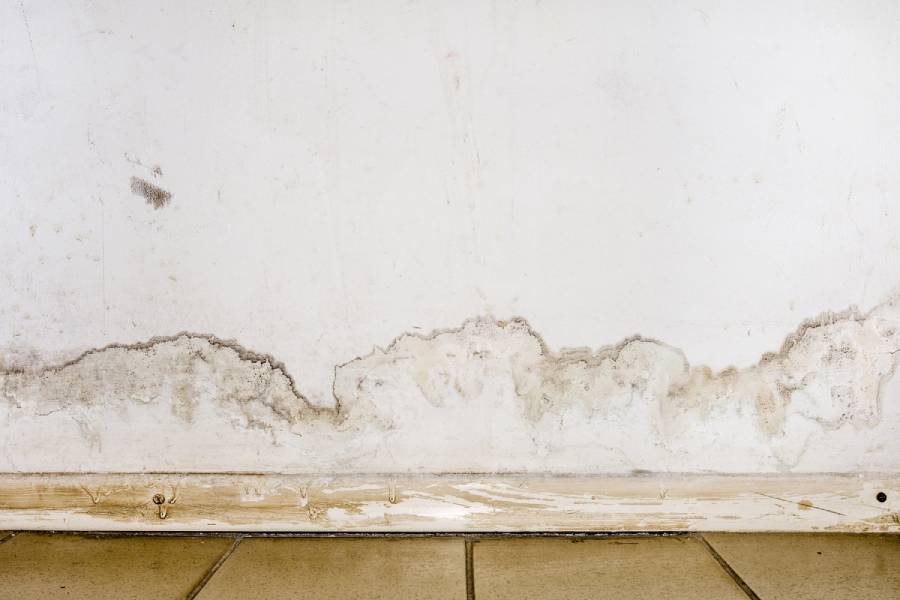
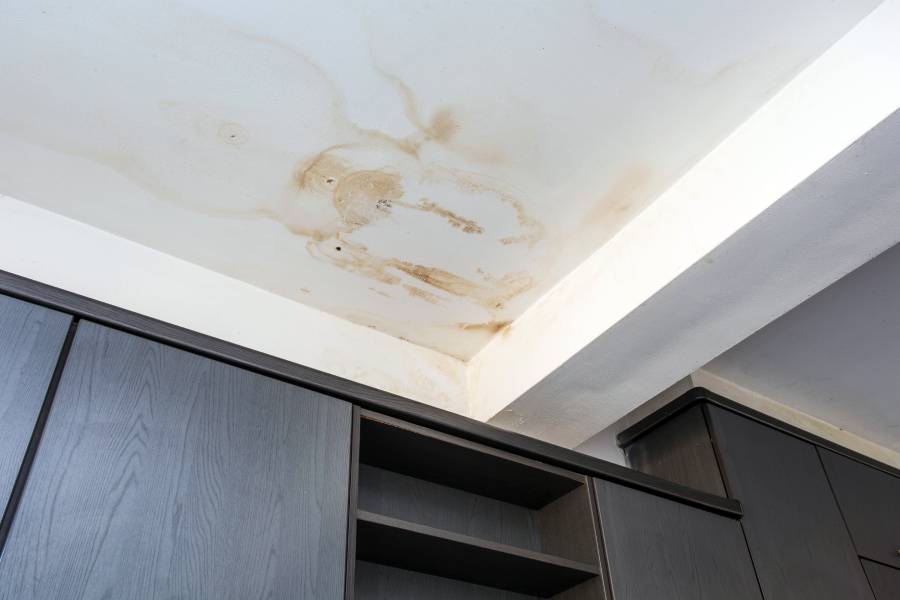
Damp is the presence of unwanted moisture in a building, it can cause stains, marks and mould on walls, furniture, and clothes. The main causes of damp include condensation, water coming in from outside the building - such as penetrating damp and rising damp. As well as leaks from plumbing faults, failed appliances and poorly sealed baths and showers. Insufficient or inadequate insulation is also a cause of damp. Please see below images to see what this looks like.
Penetrating damp
This is where water gets into the property through the walls, gutters, drains and roof. Often due to faulty mortar with gaps or holes, broken roof tiles, leaking gutters, blocked drains or gullies, or even flooding.
Rising damp
This happens when moisture rises from the ground beneath the property, up through the floor and walls - this usually happens if the damp proof course (DPC) of a property has failed.
The main causes of damp
Condensation
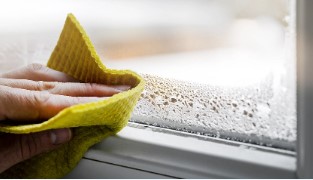
Penetrating damp

Rising damp
Leaking pipework
Insufficient or inadequate insulation
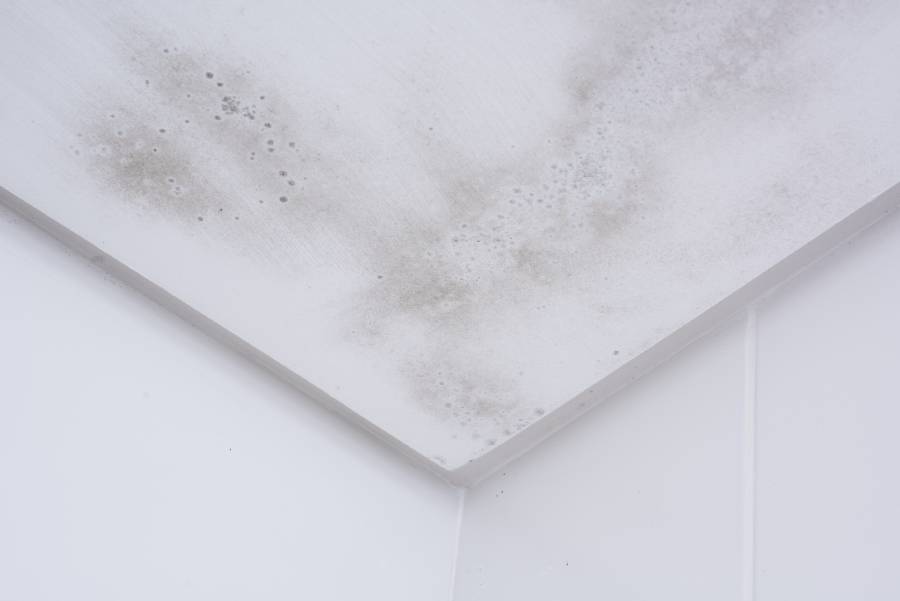
Mould is a fungus which spreads through spores that can quickly grow on damp surfaces. It can often look like black, white, or green patches. When disturbed mould can cause allergic reactions and irritations.
Steps you can take to prevent damp, mould, and condensation
Condensation is the most common cause of damp problems. All homes experience condensation on places like windows, and this isn't a problem if it clears up quickly.
Problems begin when you leave water on a surface for long enough to start causing damage or mould to grow.
The following steps will help you to reduce condensation, and the potential for mould to grow in your home.
Use a towel or absorbent cloth to wipe up condensation from surfaces, then open the window for 15 minutes. If you don't, the moisture will collect which may start to cause damage. The moisture may also evaporate again during the day, raising humidity levels, which makes condensation worse when the room cools down.
On dry days open windows to allow the moisture in the air to leave your home.
Open a few windows a little throughout your home instead of opening one window wide. This will help air to move through the property. Try to do this at least once every day for a minimum of 15 minutes, especially when cooking and bathing.
You should keep windows closed on wet days as damp air may increase humidity in your home.
Keep trickle vents open all the time. If one of your windows or trickle vents is faulty, please report a repair.
Avoid drying clothes on radiators as this prevents heat and airflow in your home. It is best to dry your clothes outside. But if that is not possible, dry your clothes in the bathroom with the door closed and extractor fan on, or a window open. Alternatively, you can use a clothes horse placed in the centre of a room.
When cooking with liquids use pan lids to stop moisture escaping. Another way of minimising the impact of cooking on your home's humidity is to close doors and open windows or use an extractor. This will help stop moist air from spreading to the rest of your home.
If you have an extractor fan that is not working properly, please report this to us and we will repair or replace it.
When taking a shower or using the bath put your extractor fan on. If you do not have an extractor fan you can open the windows and close the doors. This will help stop the moist air spreading around your home.
If you have an extractor fan that is not working properly, please report this to us and we will repair or replace it.
Try to keep the temperature in your living areas above 17 degrees. However, you should avoid using portable gas heaters as they can create high levels of humidity. They are also expensive to run and can release harmful gases into the air.
Where possible try to keep furniture away from external walls. This is because they are cooler and more likely to gather condensation. Allowing space between items in storage or around furniture helps air to flow and reduces the impact of condensation.
If you are concerned about the cost of doing any of the things listed here, please visit the Kirklees Council Cost of Living web page or contact our money advice service for additional support and advice.
Damp not caused by condensation
Not all damp and mould issues are due to condensation. If you think the cause is something else, we are here to help. Please report these issues to us as soon as possible.
What we are doing to reduce damp, mould, and condensation
We are training all our staff to recognise signs of damp, mould, and condensation. This training will help them identify and report these issues whenever they visit or work on any of our properties.
We are also:
- Asking external contractors to ask about damp and mould when visiting properties and report back anything they find.
- Analysing data from reported cases to spot trends in certain property types or areas, so we can focus our planned works accordingly.
- Providing all our staff with refresher training to improve their awareness and understanding of damp and mould.
- Working with both internal and external partners to promote ways for reporting damp and mould.
- Improving our communication with tenants and the wider community about damp and mould.
- Investing in new technology to support the delivery of damp, mould, and condensation services.
- Working with our Tenant Led Panel (TLP) to make sure our approach meets tenants needs.
Home assessment visits and planned improvements
We're in the process of surveying all our properties over the next three years. A surveyor will visit each home to check the condition of the building inside and out.
We'll use the results to plan improvements; like replacing kitchens, bathrooms, and windows, and doing external work to prevent damp and mould.
If your property is included in planned works, you'll receive a letter in advance.
Stay up to date
We will regularly update this webpage with any new information and continue to communicate through existing channels. You can also keep up to date with the latest news about damp, mould, and condensation: Subscribe to our newsletter