Unearthing the past: Mining heritage at Oakwell Hall and Bagshaw Museum
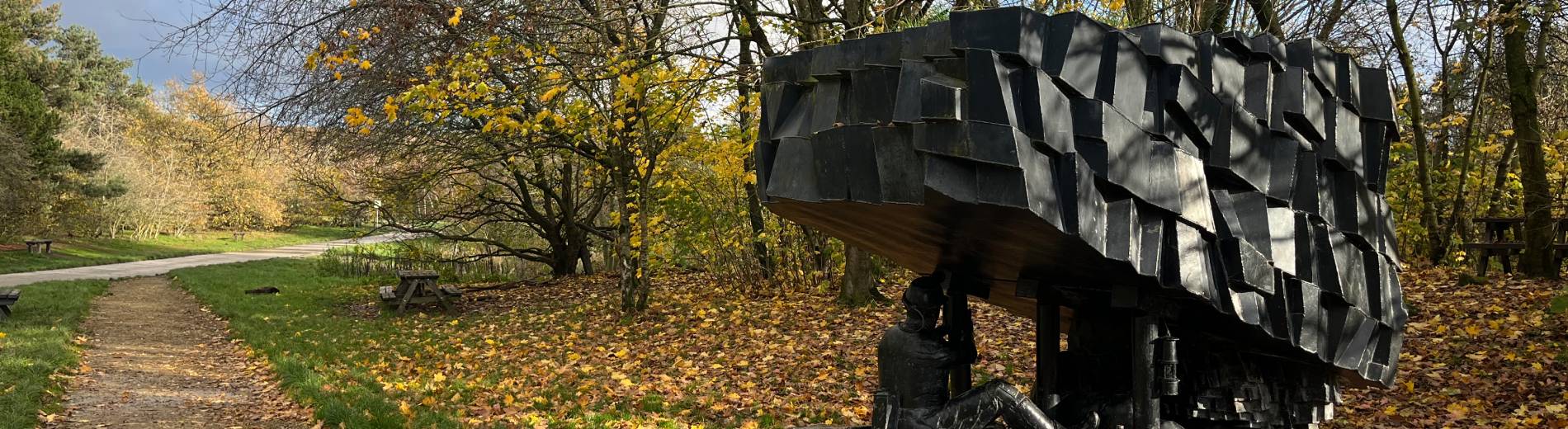
Tucked away in the grounds of Oakwell Hall, Kirklees' industrial past lives on. On the edge of the estate, at the site where miners once boarded the 'coolie car' before their underground shifts, a powerful sculpture now stands. Depicting two miners at work, this piece marks the site entrance of the former Gomersal Colliery which was once a vital part of coal mining that shaped local life for generations.
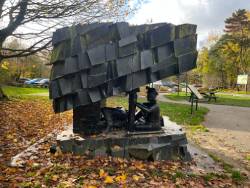
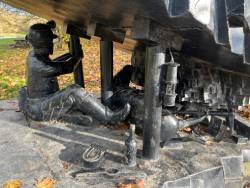
But it's not just the sculpture that tells this story. At Bagshaw Museum, a fascinating collection of mining artefacts offers a deeper look into the working conditions and technologies used in this coal mine. These once-everyday tools are now unfamiliar to many of us, yet each one holds its own story of ingenuity, safety, and survival in one of Britain's most dangerous industries.
The oil safety lamp: a light in the darkness
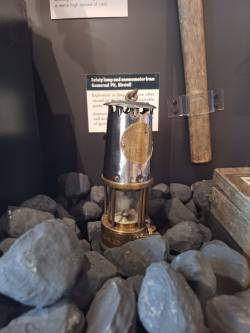
More than just a source of light, this lamp was a crucial tool in ensuring safety in the mines. Originally developed from designs by Sir Humphry Davy in 1815, this safety lamp currently on display at Bagshaw Museum, represents the culmination of over a century of design improvements.
The most important use of safety lamps such as this was to detect dangerous gases such as methane (or 'firedamp'). It works by isolating the flame in the centre of the lamp from the surrounding air. Samples of the nearby air would then have been blown through small tubes towards the flame, so miners could observe how it responded. If the flame grew or changed colour, there were likely harmful gases around.
Continued developments throughout the 1900s meant that electric lamps eventually became the norm for lighting, but safety lamps such as this continued to be vital for gas detection. By law, colliery deputies were required to carry both a flame lamp and an electric lamp during pre-shift safety inspections. Tools like these were the difference between a safe shift and catastrophe underground.
The anemometer: Measuring the invisible
Also among the fascinating objects on display at Bagshaw Museum is this hand-held anemometer. Though small and seemingly simple, this device (like the safety lamp) played another crucial role in keeping miners safe.
Miners used anemometers to measure the speed of airflow in tunnels and shafts, helping to ensure that mines were properly ventilated. But ventilation was not just about comfort, it was a matter of life and death. Without a steady circulation of fresh air, gases like methane and carbon monoxide could build up to dangerous levels, leading to explosions or suffocation.
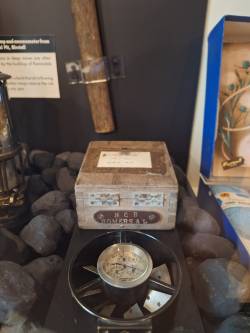
This anemometer worked by using a small set of vanes, like a miniature windmill, which would spin as the air moved past. The dial or counter on the front recorded the speed of the vanes to provide a reading of air velocity. These readings were especially important during pre-shift inspections or in new or recently blasted areas. Without tools like this anemometer, there was no reliable way to tell if the air was moving enough to keep gases from accumulating.
Today, these instruments offer a tangible link to the everyday tasks of mining life. Though they might appear unassuming, they tell a powerful story of the dangerous and volatile environment that many people worked in, alongside the fight to make mining a safe employment.
From the sculpture at Oakwell Hall to the carefully preserved items at Bagshaw Museum, Kirklees' coal mining history lives on not just in memory, but in the tools, techniques, and technologies that protected the workers who once laboured beneath our feet.
Visit Bagshaw Museum to explore the collection and uncover more stories from our industrial past.