Embroidery - what's the point?
I'm the senior curator at Kirklees Museums and I've been working with the collections for over 25 years.
I have been privileged to handle an amazing range of costume and textiles from all over the world. From christening gowns to Quran covers, from wedding dresses to table runners, many feature beautiful embroidery. There are many different types and styles, and they represent many, many hours of careful, painstaking work and exhibit great skill.
But why? Why do busy people spend so much time adding stitches to the surface of textiles? Can all that work really be just to make things look pretty and decorative?
So I've decided to delve into our collections to answer the question 'what is the point of embroidery?'
Samplers
The sampler collection is probably the largest group of embroideries. There's more than 100.
The first samplers were like a reference work of stitches, so an embroiderer could remember how certain shapes and patterns were done. Before books were widespread, or many people could read, this was very useful indeed.
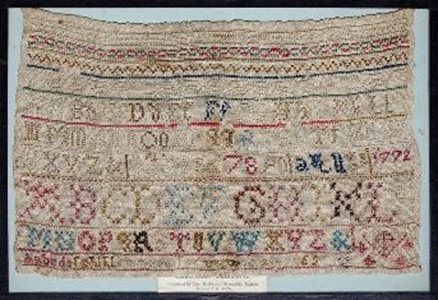
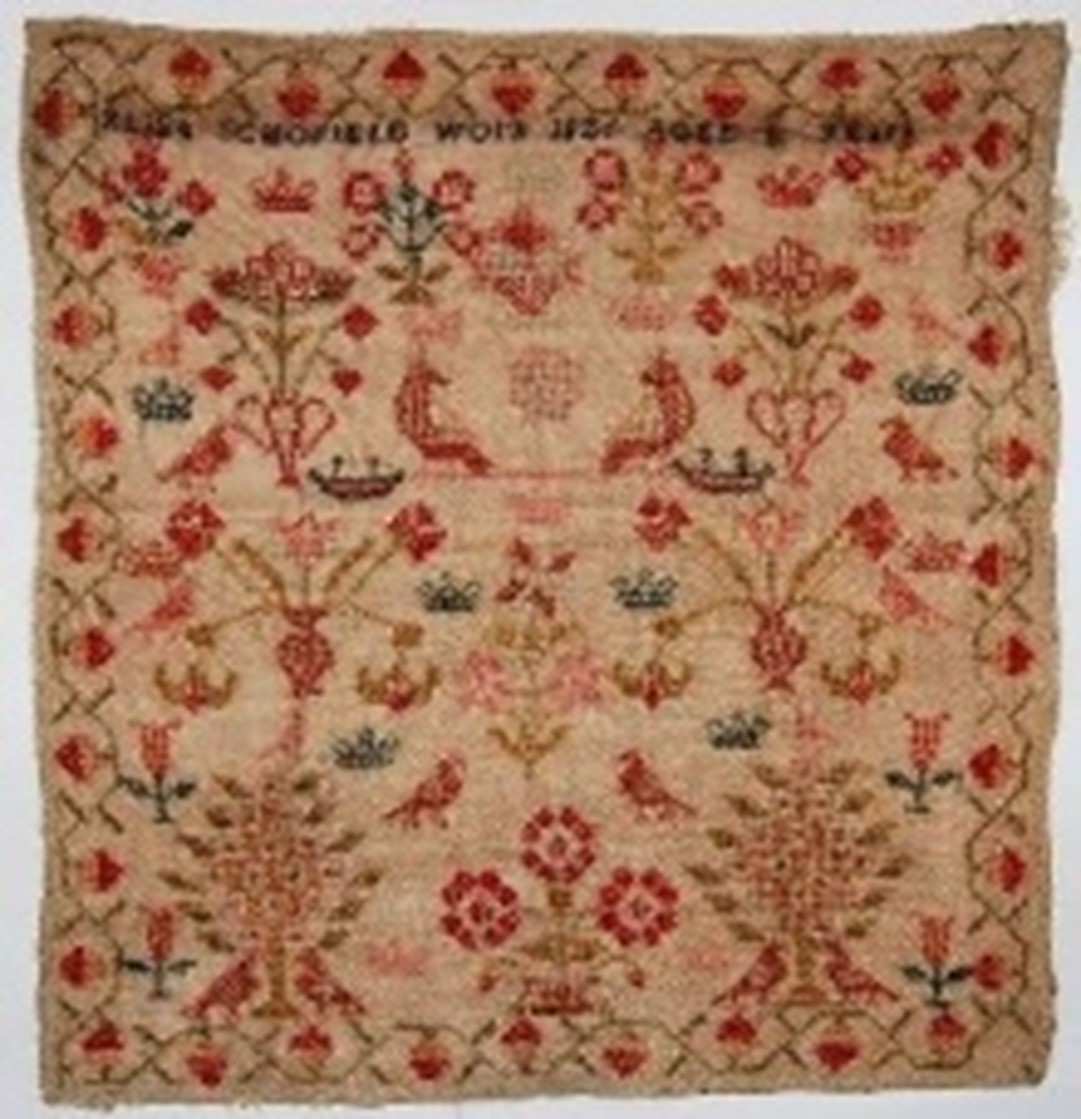
Most of the samplers I look after are from the 1800s and likely done by schoolgirls. Sewing samplers was a major part of girls' education. It helped them to learn their alphabet, incorporated religious and moral instruction and surely it helped them to concentrate and focus.
Needlepoint
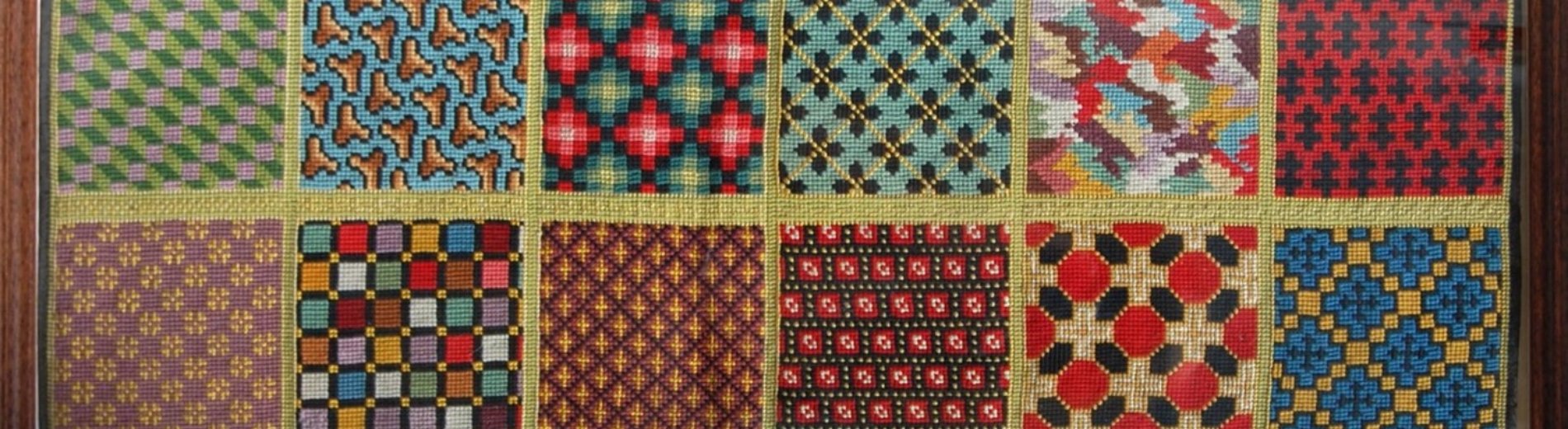
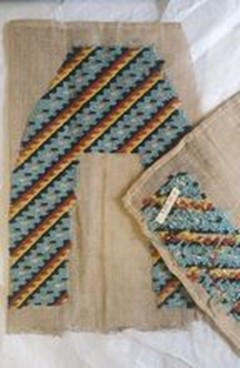
We look after quite a few needlepoint embroideries (sometimes called Berlin wool work or tapestry) where an open canvas is completely covered in close-stitched embroidery thread, to build up an overall design. Many of them are large pictures, often of romantic, religious or historical themes and are framed for hanging on a wall at home. They are not to everyone's taste!
But needlepoint does have a real practical benefit: it can be used to create solid, strong fabric of a specific functional shape that couldn't be made by weaving.
Household textiles
Our collections include a wide range of household and domestic textiles, from tea towels to tablecloths and pillowcases to bed sheets. Some are plain and functional, but flat textiles are easily decorated. Embroidery turns mundane objects into things of beauty, making the home a more attractive place to live. They have often been given as gifts so also hold emotional resonance as well.
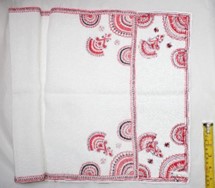
Embroidered mat (2012_6a2)
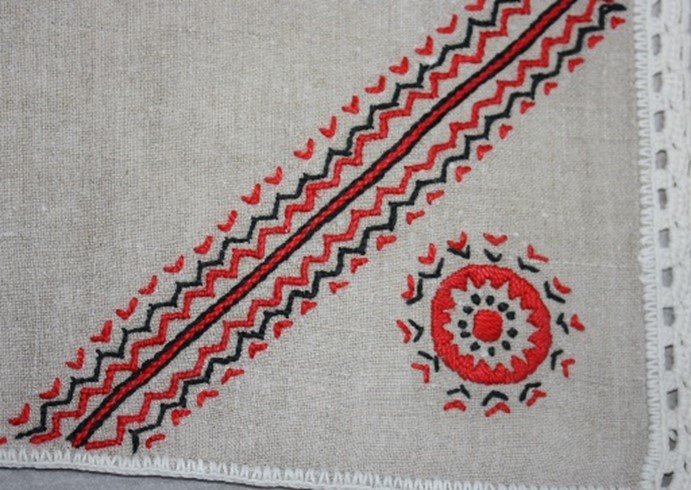
Embroidered runner (2012_6b2)
These mats and runners were brought from Poland when the owners moved to Birkby. The traditional patterns were probably embroidered by a family member and must have brought back memories of the people and places that had been left behind. Notice, as well, how the important job of hemming the edges has been done with colourful embroidery stitches.
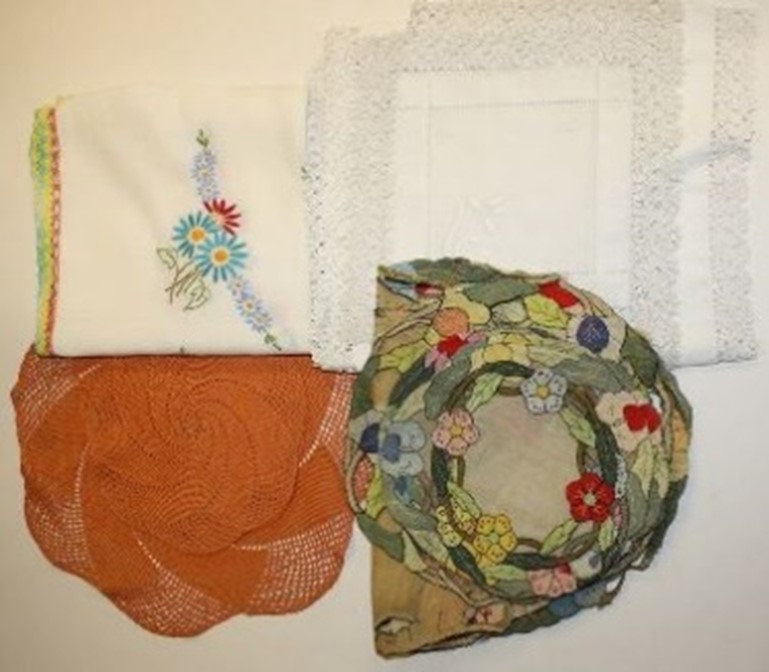
Nellie sewing patterns (2019_22a)
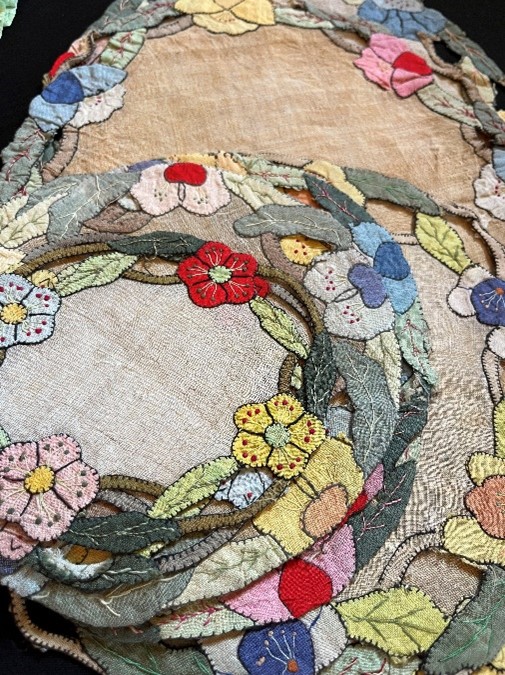
Close-up of Nellie's sewing pattern
These were made by Nellie, who worked in local mills. During meal breaks the women sewed together, chatting, sharing patterns and ideas. It was an important social activity as well as a relaxing hobby and probably had health benefits. Nellie lived to 110!
Patchwork and quilting
These are some of my favourite textiles. I love the interplay between geometric patchwork squares and sinuous quilting stitches.
Patchwork is a great way to create a new piece of useful fabric from off cuts and worn-out clothes, and the layering from quilting helps to strengthen them and creates a warm blanket or clothing as well. Patchwork quilts don't always use embroidery, but some of the best in our collection do.
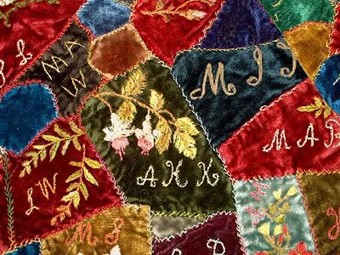
This detail of crazy patchwork dates from the late 19th century and is made from odd pieces of velour and velvet. They might be from a local mill. Such fabrics were expensive so well worth re-using. They have been joined together with embroidery, using herringbone and feather stitches.
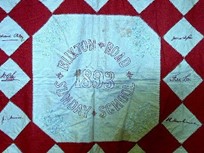
Buxton Road Sunday School
embroidered patchwork (73174b)
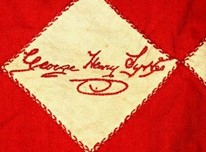
Embroidered signature on patchwork
(73174c)
This patchwork from Buxton Road Sunday School is covered in embroidered signatures. People probably paid to be included, as a fund raiser. It was a way to show support and bring the community together.
Wedding dresses
There are many wedding dresses in the collection. Some are home-made by the bride or her family. They are imbued with love, joy and hope for the couple.
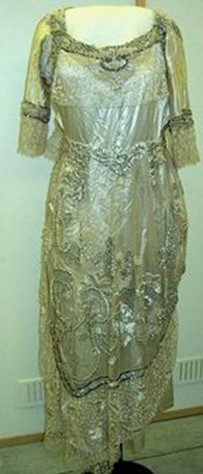
Professionally made dresses are expensive. They often have lots of embroidery, sometimes with valuable jewels and silk thread, to celebrate the great day and highlight the bride as the star of the show!
Children's clothing
Embroidery is very popular for children's clothing. Mothers (and it does tend to be the mothers) and mothers-to-be make a lot of clothes for their babies and children and often embellish them with embroidery. Traditional christening gowns are covered with all kinds of lace, tucks and other details and are often handed down through families, to be reused. They celebrate the joy of a new birth.
For older children, smocking has been popular on clothes. It's a great way of giving shape to clothes, but also allowing some give and flexibility, especially before Lycra and stretch clothing became so widely available. Very helpful when trying to dress a fidgety child.
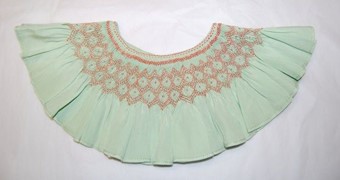
This collar was worn over a matching dress by a girl in Lindley around 1935. The family was wealthy and her mother didn't work. Her hobby was making all her children's clothes. The collar is made from a flat length of crêpe de chine which has been transformed into a circle by tiny pleats held in place by smocking.
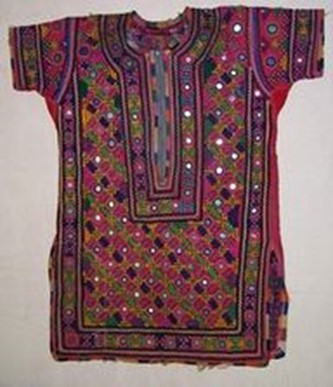
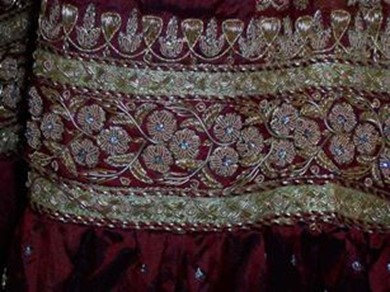
This dress was made for a girl by her mother in Hodko, a village in the Kutch region of Gujarat. The village is famous for its various crafts, especially embroidery, and has become quite a tourist centre. The style is unique to the region and would identify the girl as coming from the area.
Does Embroidery have a Point?
Looking at the collection has shown that embroidery has all kinds of benefits. On a practical level it's a good way of joining fabric, hemming and edging, of shaping and reinforcing garments and reusing and recycling fabric. It also helps express identity and community spirit. If you embroider you will also know that it is great for relaxing and expressing your creativity. So yes, it is so much more than creating something decorative.
But we shouldn't dismiss the value of making objects more decorative. Decorating our homes makes them nicer, more comfortable places to live, and wearing nice clothes makes us feel better about ourselves. Not frivolous at all!
Want to see more?
Most of the samplers in the collection can be viewed online at Kirklees Image Archive.
All our museums have some embroidery on display. If you spot any when you visit, think about why the embroidery was done, and what benefits it brought. You might come up with some other reasons I haven't mentioned.