As highlighted in my previous Director of Public Health Reports and the Kirklees Health and Wellbeing Strategy , health is shaped by much more than healthcare alone. A range of factors, including our health behaviours, emotional wellbeing, relationships, financial circumstances and wider social conditions, influence health and wellbeing. These wider determinants can affect women's experiences of maternity care, their ability to access support and the outcomes they and their babies experience. Evidence presented in this report demonstrates clear inequalities associated with deprivation, ethnicity and other social factors.
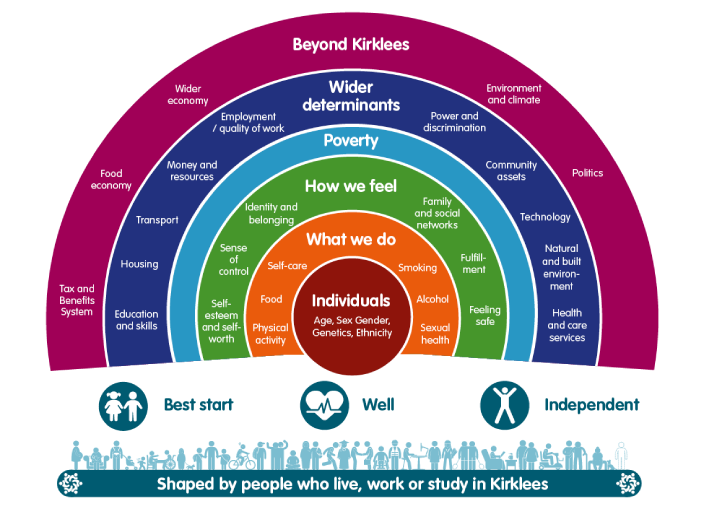
The 'rainbow model' of health demonstrates how a person's health and wellbeing are influenced by a range of interconnected factors. These include:
- Individual behaviours and choices
- Emotional wellbeing
- Social relationships
- The broader social, economic, cultural and environmental conditions in which people live
In relation to maternity care, these factors can influence whether women are able to access services, understand information, make informed choices, advocate for themselves and achieve the best possible outcomes for themselves and their babies.
Examples of how these factors can influence maternity experiences and outcomes include:
Factors such as smoking, alcohol use, diet and physical health can influence both maternal and infant outcomes. Concerns about judgement, stigma or previous experiences may also make some women reluctant to discuss sensitive issues or seek support, which can affect their engagement with services and access to appropriate care.
Mental health, confidence, previous experiences and the availability of supportive relationships can all influence how women experience pregnancy and maternity care. Women who feel informed, supported and in control may be more likely to access services, ask questions and participate in decisions about their care. Conversely, trauma, anxiety, social isolation or previous negative experiences can create additional barriers.
Poverty can affect every stage of the maternity journey, influencing health before pregnancy, access to services, experiences of care and outcomes for both women and babies. Evidence highlighted throughout this report demonstrates the significant impact deprivation can have on maternal and infant outcomes and experiences. This is also explored in greater detail in my DPH Report: Poverty Matters.
Wider social and environmental factors
The wider determinants of health can influence women's experiences in many different ways, including:
The ability to attend appointments may be affected by cost, access to a car, public transport availability, caring responsibilities and working patterns.
Women with insecure employment, limited flexibility or financial pressures may find it more difficult to attend appointments or access support.
Understanding complex information, navigating healthcare systems and making informed decisions can be more difficult for women with lower levels of health literacy or for those facing language barriers.
Women may feel unable or unsure how to voice their views, ask questions or challenge decisions where there is a real or perceived power imbalance. Experiences of discrimination, language barriers, cultural differences or previous trauma may further affect confidence and trust in services.
These factors do not operate in isolation. Women often experience multiple influences at the same time, and the cumulative impact can shape their access to services, experiences of care and health outcomes. If we are to reduce inequalities in maternity care, we must not only improve services but also address the wider factors that influence women's lives before, during and after pregnancy. The following section explores how these inequalities are reflected in national and local maternity data.
