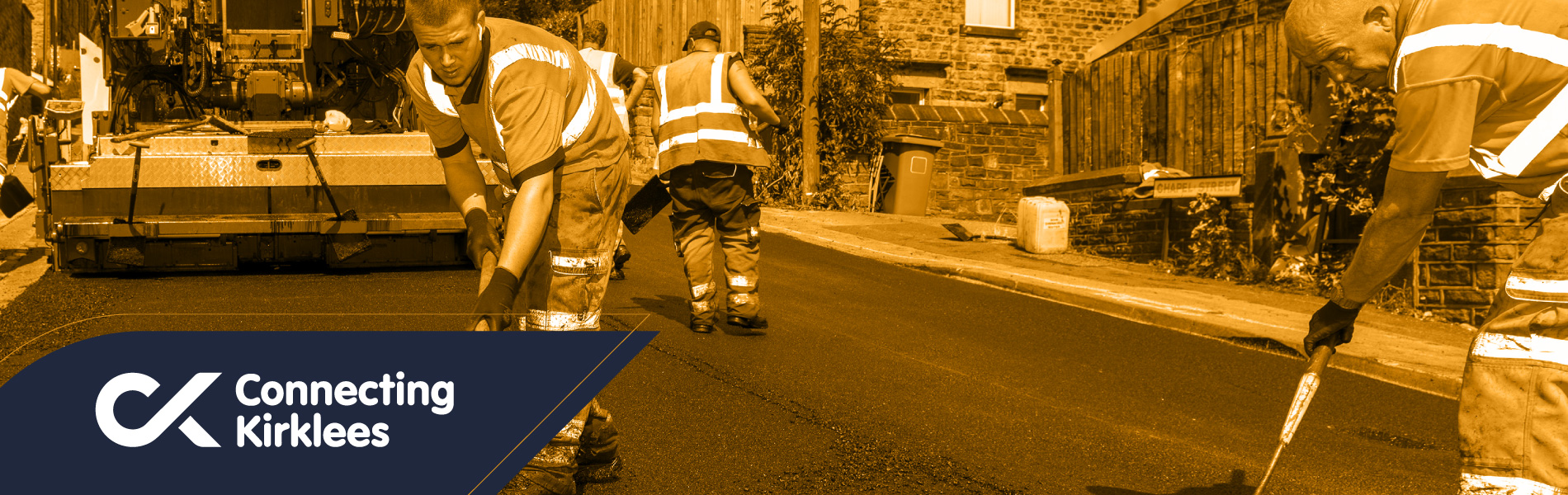
Potholes and resurfacing
We know safer roads is a priority to residents and it's our priority too. Here we explain our methods and how we prioritise what we fix and when.
Potholes
A pothole is a hole in the surface of a road.
They form when water seeps into cracks in the roads surface. The water sits underneath the roadbed and over time, freezes and thaws repeatedly. It can become worse when moving traffic pushes water through already saturated roadbeds, causing it to become weaker. As vehicles continue to pass over the weakened area, some of the asphalt become loose and forms a pothole.
Potholes can appear at any time of the year, but it is more commonplace during winter and early spring when road surface temperatures are below zero.
Our skilled highways team inspect roads monthly, three monthly, six monthly and annually, and prioritise them according to the safety risks posed.
Any potholes deemed an immediate safety hazard; we will temporarily fill it with asphalt to make it safe. We aim to do this within 24 hours of receiving a report of a pothole.
If it requires a larger repair, it will be marked up and we will return within 28 days to make a permanent repair. Marking the pothole ensures that when our team arrives to repair it, they know how large the repair needs to be.
- Remove debris and water from the pothole.
- Cut clean edges around the pothole, making a square hole ready for new material to bond to when compacted.
- Bond new material to the square hole.
- Compact the material into the square hole, with machinery, to ensure its level with the existing road surface.
Sometimes we may repair one pothole, and not another on the same stretch of road, but we must prioritise the most hazardous defects. Resurfacing roads does not prevent potholes from forming.
Report a pothole on a road or pavement in Kirklees
Resurfacing
Surface dressing is a preventative treatment. By sealing the surface of a road and improving the surface texture, we can prevent potholes from forming and prolong the life of a highway for up to 10 years.
It's an efficient, effective and economical method which reduces long-term disruption and keeps highway networks on the move.
Road is assessed to ensure they are right for this treatment. They are pre patched and potholes repaired before the dressing is applied if necessary.
If the road has deteriorated beyond what is suitable for surface dressing, then alternative treatment will be sought. The roads selected are pre patched and potholes repaired before the dressing is applied if necessary.
Advanced warning signs are placed on site and diversion routes signed if required. Once completed, the road will reopen with traffic calming measures until the aggregate chippings are embedded.
We resurface and reconstruct our pavements and kerbs when necessary, depending on their condition, usage and any defects. We use a variety of treatments, from applying a thin surface, such as slurry sealing, to a full reconstruction.
