What's new and why it matters
The museum collection is constantly evolving. Looking after these objects is not just about preserving what we already house, but it's also about regularly reviewing our collection and carefully adding new items that help to tell the story of our local area.
We are often approached by donors offering their own objects, and we are always on the lookout for pieces that could strengthen and enrich the collection as a whole. Every potential addition is judged in line with our collections development policy. This is a framework specific to the museum that we use to guide what we collect and help ensure that anything the museum acquires fits with our wider purpose. For us, this means focusing on the stories of Kirklees, particularly connections to textiles, engineering, music, sport and world cultures.
With this in mind, we thought it would be nice to share a few recent acquisitions and why we chose to bring them into the collection.
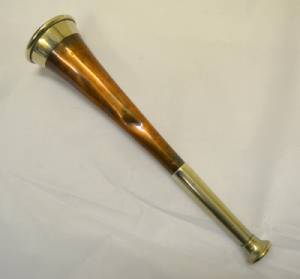
This small hunting horn dates from the early twentieth and is thought to have belonged to May Tinker of Meal Hill House in Hepworth, Holmfirth. The Tinkers were a well-known local family, renowned not just as colliery owners but as active supporters various religious, educational, and social aspects of local life. They granted land, buildings, and finances to the village church in Hepworth and the non-conformist chapels in Jackson Bridge.
When researching this item, it was difficult to find much information on May Tinker herself. Although her presence is elusive, this horn still offers a glimpse into the leisure activities and social networks of the time, and highlights some of the challenges of researching women's history. It also shows how much of what we know about objects like this is often passed down through word of mouth.
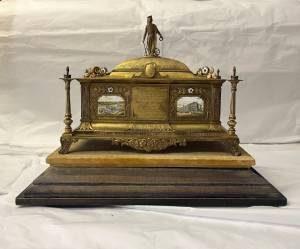
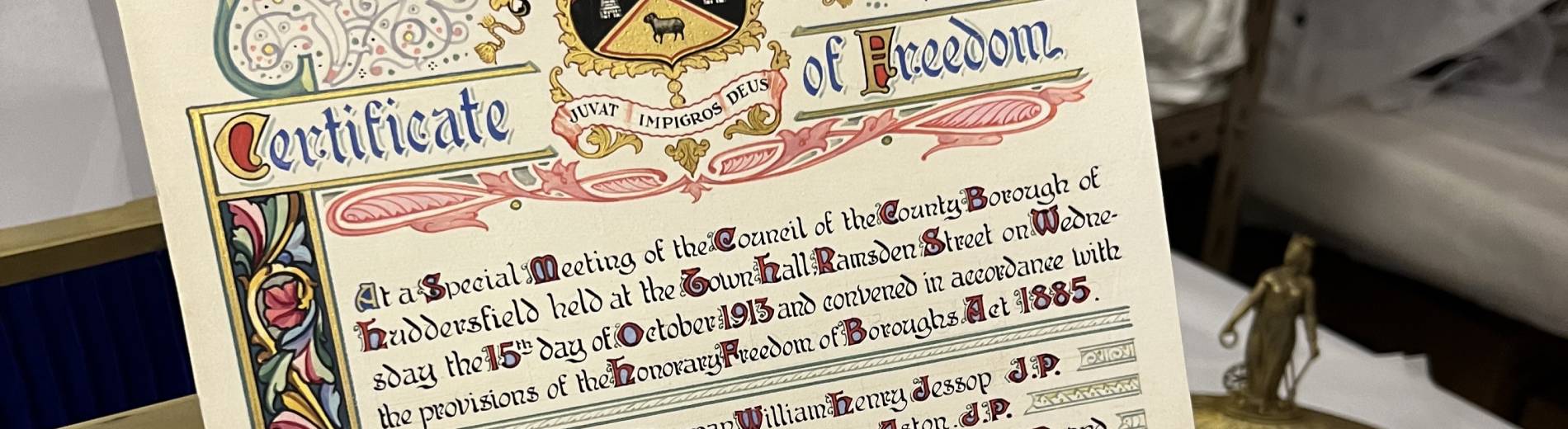
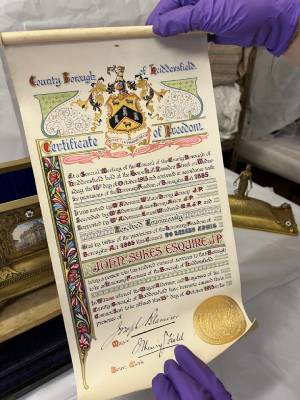
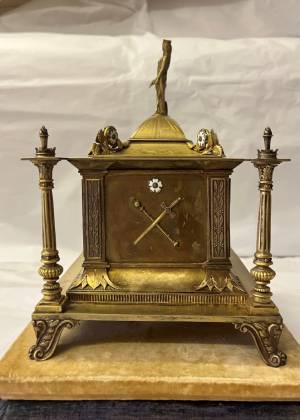
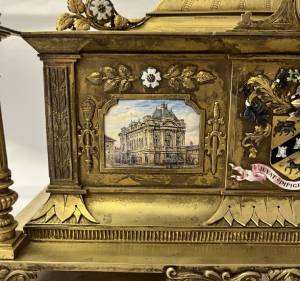
This casket and scroll show early twentieth-century civic as well as the recognition of a prominent local figure. The enamelled casket contains a scroll granting the Freedom of Huddersfield to John Sykes of Lindley on the 15th of October 1913. It's an impressive object in its own right, and still sits within its original glass case.
Sykes was a Justice of the Peace, head of Joseph Sykes Bros (later the English Card Company), and a well-known philanthropist. His work across business and the local community makes this a strong addition to the collection. At the time, the Huddersfield Examiner highlighted not just his business success, but also his generosity and the respect he had earned locally. As well as its aesthetic appeal, this object is a nice example of civic pride and the importance of recognising contributions to the local community.
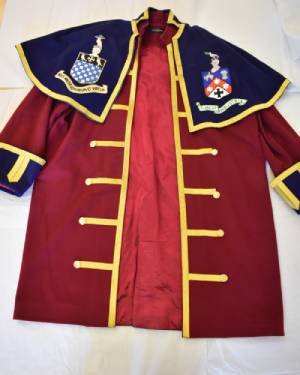
Museum collecting isn't just limited to historic objects and items are acquired that reflect more recent history. This town crier outfit, for example, was worn by Laurie Gilbert who took up the role of Batley and Dewsbury town crier in 2010. The set includes a coat, yellow waistcoat, tricorn hat, bells, and scrolls, and its excellent condition reflects the passion that Laurie brought to the role.
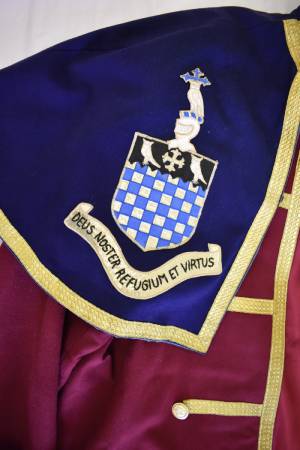
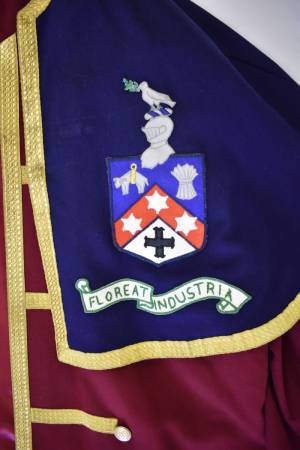
In Britain, town criers date back to medieval times and are even depicted in the Bayeux Tapestry. Historically, they played a vital role in sharing news with the public. While this responsibility is no longer essential to how we receive news today, town criers remain a familiar symbol of community
This outfit not only represents a long-standing tradition but also highlights how local people continue to keep these customs alive today. The story provides a nice example of how heritage is not limited to the past but something that continues to evolve in the present.
Taken together, these objects highlight the range of stories we're interested in collecting, from early twentieth-century social networks and industry to traditions that are still being kept alive today. Each one helps to build a rich and connected story of Kirklees.