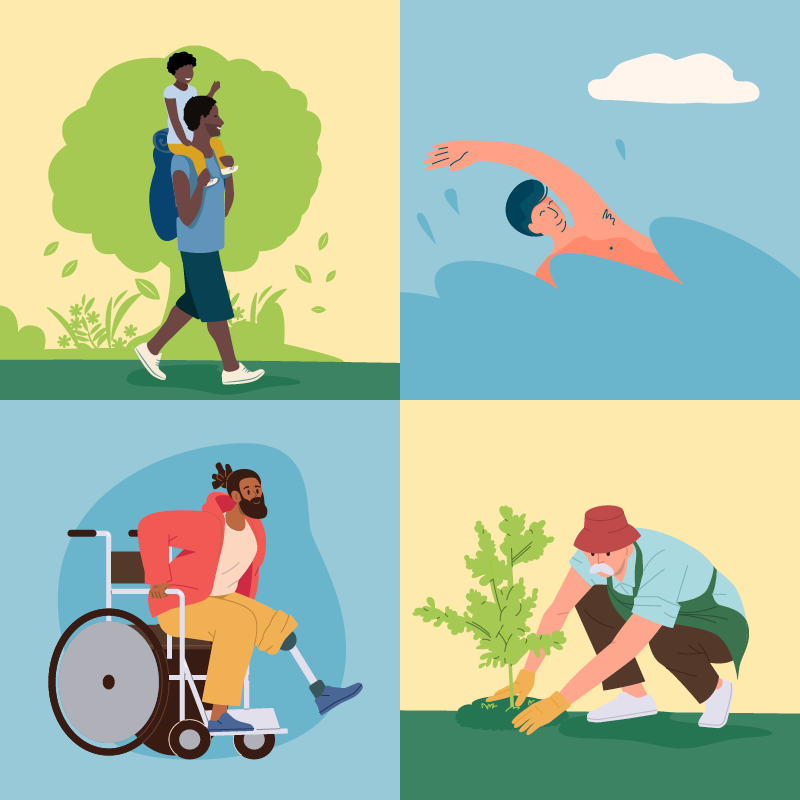
Importance of Physical Activity
"If physical activity were a drug, we would refer to it as a miracle cure, due to the great many illnesses it can prevent and help treat." - Dame Sally Davies, former Chief Medical Officer (CMO).
Being physically active simply means moving your body by using energy.
Physical activity is good for us - it delivers numerous health benefits, as well as social and economic benefits for individuals and communities. The more we move, the better.
Health benefits from physical activity include:
- Improving muscular and cardiorespiratory fitness
- Improving bone health
- Reducing the risk of hypertension, coronary heart disease, stroke, diabetes and various types of cancer
- Reducing the risk of falls as well as hip or back fractures
- Helping to maintain a healthy body weight
- Helping to improve mood, reduce anxiety, and combat depression
- Helping to improve brain health and function
- Helping to improve sleep quality.
Physical inactivity is estimated to contribute to almost 1 in 10 premature deaths from coronary heart disease (CHD), and 1 in 6 deaths in the UK from any cause.
The wider benefits of a more active society include:
- Social inclusion - increased opportunities for people to maintain or create connections to others in their community, and help reduce social isolation
- Community cohesion - bringing people together from all different kinds of backgrounds, and helping create safer, more inclusive communities
- Active environments - clean, safe, accessible places and spaces that enable all people to engage in regular physical activity
- Improving confidence, self-esteem and broader skills (such as teamwork, decision making, inter-personal, leadership, co-ordination), which can promote educational attainment and employment prospects
- Increased enjoyment and happiness.
Despite these benefits, creating the conditions to enable everyone to move more often is complex. Physical activity is influenced by many inter-related factors - ranging from national policy to hyper-local elements. As a result, no one single organisation or approach can solve everything on its own - a 'whole systems' approach is needed.
Helping more people to move more is also a key contributor to achieving our Kirklees Shared Outcomes. It contributes to each of the outcomes in different ways, and, in particular, to achieving our Best Start; Clean and Green; and Well Outcomes.