Director of Public Health Annual Report 2024 to 2025: Physical activity matters
Welcome to my annual Director of Public Health report for 2024/2025.
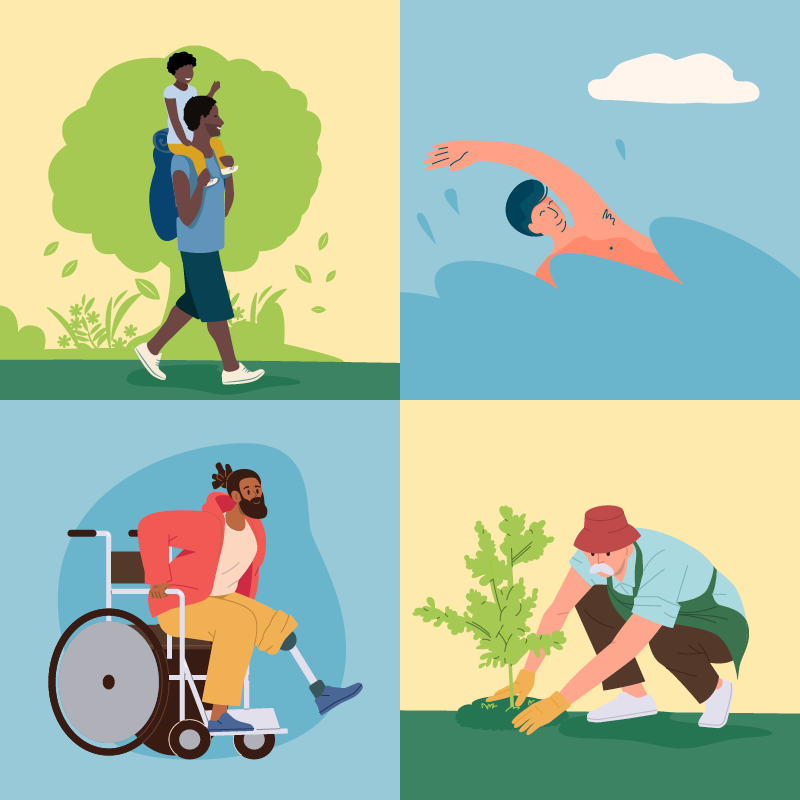
This year, I wanted to focus on physical activity. Firstly, I want to recognise that the term 'physical activity' means different things to different people. For some people this could mean going to the gym, playing competitive sports, cycling or swimming, but for others it could mean going for a walk in a local park, running after your children or getting off the bus one stop earlier.
Whatever your personal definition of what it means to be physically active, the evidence is very clear - the advantages of living an active lifestyle are huge and it is never too late to benefit from taking up physical activity. At all stages of life, from the very early years and right into older age (including during pregnancy, and for those with long-term health conditions), physical activity is a fantastic way to maintain and improve physical and mental health. This, in turn, can help reduce the burden on our health services; may help support people entering or remaining in work; and support our environmental efforts by adopting more active forms of travel. More than this, it provides people with an opportunity to connect with one another, with families and friends, and with local places and open spaces.
The good news is that even small amounts of physical activity can make a big difference over time. In terms of physical activity, the key message is that 'some is good, more is better'.
National and local evidence shows us that levels of physical activity vary hugely across different population groups. Within Kirklees, around a quarter of people report that they do less than 30 minutes of physical activity each week. When we consider this rate amongst different groups of people, the inequalities become clear. For example, people out of work in Kirklees are over three times more likely to be inactive than people in work.
What the data also tells us is that these inequalities remain consistent across a range of population groups. Despite what we may perceive as a broad range of opportunities for people to participate in physical activity in Kirklees, there remains a range of complex barriers and enablers that influence our ability to live an active life.
This report is the start of an important journey. I want to make sure that it focuses on developing a systems understanding of physical inactivity, the associated inequalities and the factors that influence our ability to move more. It is not my intention to provide solutions here, as other ongoing work will provide further insight into our local communities. We can then use these collective findings to drive forward local action across systems to enable as many people as possible to gain from the benefits of physical activity.
As always, while this report is written by me and my team, it is intended to be used by colleagues and organisations across Kirklees. I would urge you to read the findings and 'next steps' of this report, consider your role in instigating change and share the report with your own networks.
Rachel Spencer-Henshall, Kirklees Director of Public Health
Physical activity matters: Executive Summary
Physical activity matters: Executive Summary - Plain English