Slaithwaite Moonrakers Part 1: The Story
 Written by: Georgie Burgess, Digital Engagement Officer
Introduction
Do you know the story of the Slaithwaite Moonrakers?
Our museums provide a place for the public to connect with heritage, but our collection tells stories and represents people from every corner of Kirklees, more than can be contained within any single building.
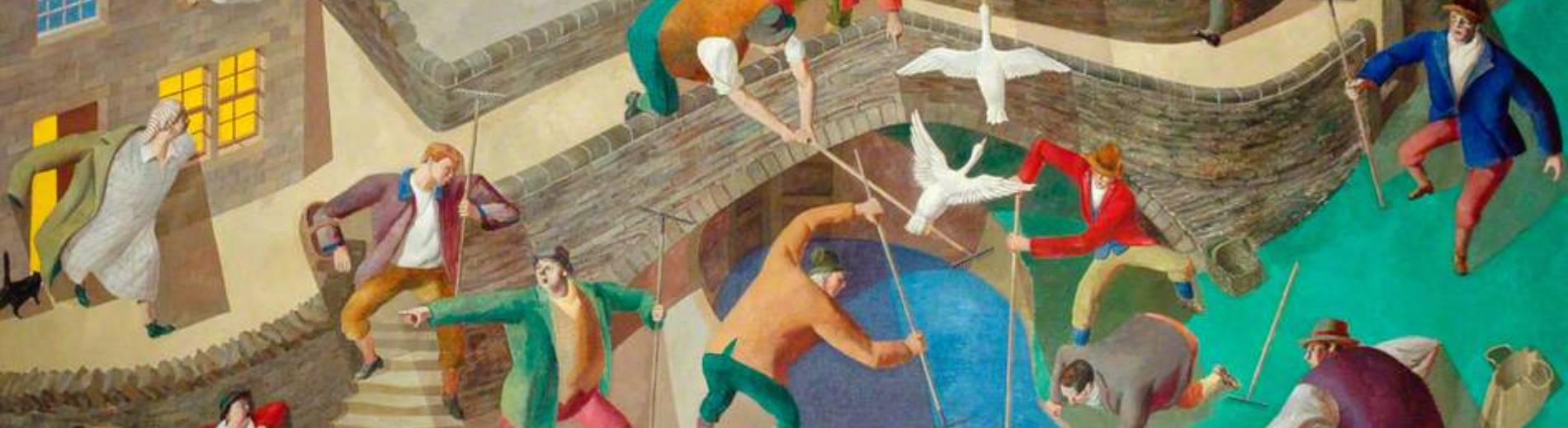
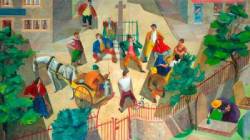
Some of these stories are represented in Charles Reginald Napier's colourful murals seen above and below. Commissioned by Huddersfield County Borough Council in 1938, the series of five murals tell of the rich traditions that live within the valleys of Kirklees. They stand 4 feet high and nearly 8 feet wide and the central mural 'The Telling of the Stories' (below) shows a man telling these tales to friends gathered in the village.
Throughout 2025 we want to dive deeper into the traditions that appear in Napier's paintings to understand their origins and how they come to life today, 80 years on.
The men who raked the moon
This year is the 40th anniversary of the Slaithwaite Moonraking festival. The festival takes its inspiration from a 19th century tale of smugglers who, in order to avoid detection, hid their barrels of rum under a canal bridge when it arrived via barge.
One night when they returned to fish out their barrels with a rake they were caught by the militia. Their excuse was that they were simply out 'moonraking' as the moon's reflection could be seen in the water's surface. Either gullible or amused, the militia let them go and the tale lives on.
In Napier's painting you can see the frenzied moonraking action happening by the canal. 80 years on, the landscape Napier painted, with its winding stone bridges and locks that punctuate the canal, remain recognisably Slaithwaite's.
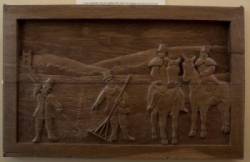
While many may not have heard of the moonrakers other versions of the legend exist in communities around the country. Notably, Wiltshire also have their own moonrakers who can be seen in this wooden relief carving in Devizes Town Hall. The people of Middleton, Greater Manchester, have a giant Moonraker fountain paying homage to the tale that features three giant crossed rakes.
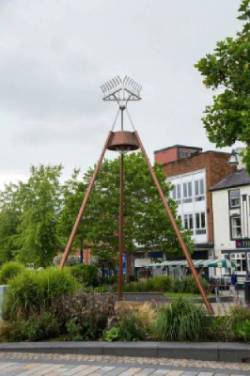
What connects these narratives is the waterways. These places have been sustained by their canals and rivers and Slaithwaite is no different. Water equals trade and the River Colne and Huddersfield Narrow Canal have historically brought trade and life to the Colne Valley. In the 19th and early 20th century water was used to power the textile mills that dotted the valley and prospered economic growth.
The photograph below shows the Slaithwaite portion of the Huddersfield Narrow Canal with Shaw Carr Wood Mill in the distance. This was the first mill in the Colne Valley to have a steam engine installed.
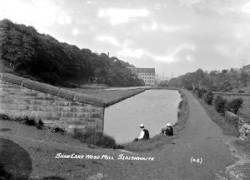
During the latter part of the 20th century, Slaithwaite, like many Yorkshire villages, saw a decline in the textile industry due to technological advancements and a shifting economic landscape which forced many mills to close.
Yet, even after this change the canal and the moonrakers remain part of Slaithwaite's story. After the restoration of the canal in 2001 it became a place for gathering, enjoying leisure time, and as a focal point for celebrations like the Moonraking.
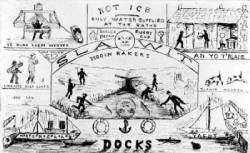
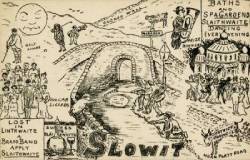
In 1985 the very first Moonraking festival took place, pioneered by Satellite Arts, a participatory arts company, and Slaithwaite Community Association. While it has changed in scope and theme over its 40 years, what remains are the light and warmth it brings to those cold February nights.
Read Slaithwaite Moonrakers: Part 2 of this series for a look at what happened when we attended the festival!